Egg Smuggling from Côte d’Ivoire Threatens Ghana’s Poultry Industry — Farmers Warn

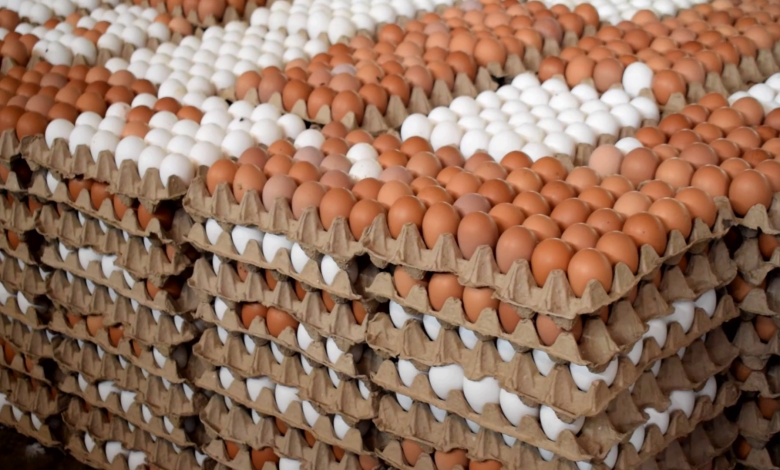
Poultry farmers are raising alarm over the growing influx of smuggled eggs from Côte d’Ivoire, warning that the practice is crippling local production and pushing many farms toward collapse.
Boris Baidoo, CEO of Boris B’s Farms & Veterinary Supplies Ghana Ltd, described the situation as a “direct threat to the survival of Ghana’s poultry industry.”
“We cannot compete with eggs that enter the country illegally at prices far below our production cost,” Mr. Baidoo said.
“If this continues, many local farmers will shut down. It’s as serious as that.”
Industry players say the illegal entry of cheaper Ivorian eggs into Ghanaian markets has created unfair competition, leaving local producers unable to sell their eggs at sustainable prices.
Farmers in major production hubs, especially in the Bono Region say the market is experiencing one of its worst egg gluts in recent years. Crates that previously sold at around GH¢58 now go for GH¢45–50, yet many remain unsold for days.
A member of the Bono Poultry Farmers Association lamented: “We are producing, but the market is dead. Buyers prefer the cheap imported eggs. Some of us have thrown away spoiled eggs because we simply couldn’t sell them.”
The farmers attribute the situation partly to exchange-rate dynamics, which have made imported eggs cheaper, as well as weak border enforcement that allows smuggled consignments to enter local markets without checks.
Long-standing challenges such as high feed costs and limited processing capacity also continue to strain the sector.
Stakeholders are however, urging government to intervene by regulating imports, tightening border controls, and prioritizing the purchase of local eggs for school feeding programmes, hospitals, and correctional facilities.
According to them, thousands of jobs will be lost, and there will be weakness in the country’s food security, if the matter is overlooked.
hey caution that if the trend continues, Ghana risks becoming fully dependent on imported eggs, undermining rural livelihoods and the long-term stability of the poultry value chain.