
Project to Tackle Land Degradation and Strengthen Climate Resilience Launched in Northern Region

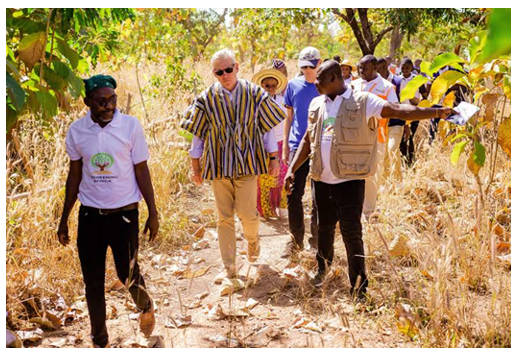
World Vision Ghana (WVG) and Catholic Relief Services (CRS), in collaboration with World Agroforestry (ICRAF), have launched the second phase of the Regreening Africa project at Kukpalgu in the Mion District of the Northern Region.
The EU-funded initiative, led by a CIFOR-ICRAF consortium with partners including World Vision, CRS, CARE, Sahel Eco and AVSF, aims to scale up landscape restoration, strengthen climate resilience and improve livelihoods for smallholder farmers in six districts across the Upper East and Northern Regions.
Regreening Africa, implemented in seven African countries, focuses on reversing land degradation, restoring ecosystems and improving food and nutrition security. The second phase will help farmers and pastoralists adopt profitable regreening practices by enhancing policies, strengthening local governance, empowering women and youth, and increasing investment in restoration.
The project will also support evidence-based planning, promote green and tree-based enterprises and encourage greater use of research by governments, civil society and the private sector. Its goal is to enable at least 200,000 additional households to adopt regreening practices, improve soil fertility, increase incomes and expand green job opportunities for women and young people.
Phase II builds on the achievements of Phase I (2017–2023), which restored nearly one million hectares of land and supported more than 600,000 households in eight countries. The initiative has been recognised as a UN World Restoration Flagship for its wide-reaching impact.
EU Ambassador to Ghana, Rune Skinnebach, said ongoing land degradation poses a major threat to agriculture and food security, reaffirming the EU’s commitment to the project.
Northern Regional Minister, Ali Adolf John, described regreening as a key pathway to climate resilience, food security and economic transformation.
World Vision Ghana’s National Director, Dr. Tinah Mukunda, highlighted local achievements, stating that over 5,117 hectares have been restored and 5,452 households supported, while CRS Head of Programming, Francis Gumah, also emphasised the strong partnerships driving the initiative’s progress.


