FONAR calls for urgent review of Ghana’s bushfire law

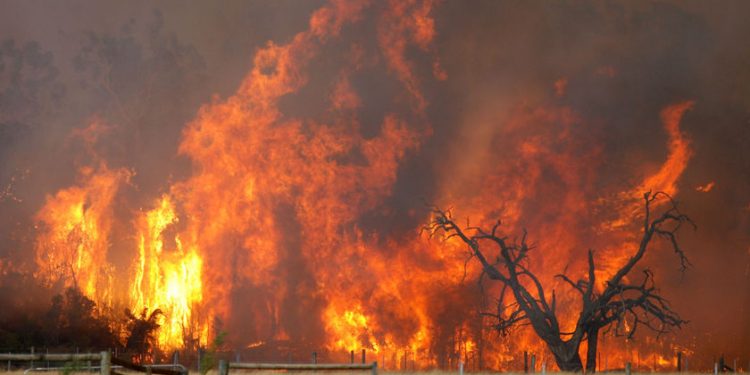
Executive Director of the Forum for Natural Regeneration (FONAR), Mr Sumaila Seidu Saaka, has appealed to the government to urgently revise Ghana’s Bushfire Control and Prevention Law, PNDCL 229 of 1990, to better address the realities and needs of rural communities.
He made this call during the launch of a School Kids Bushfire Awareness Campaign at Yagzore Primary School in the Talensi District, where he described the existing law as outdated and inadequate in dealing with the increasing complexity of bushfires, especially under changing climate conditions.
According to Mr Saaka, the current legislation penalises traditional fire use for land and natural resource management instead of encouraging regulated and safe burning practices.
He explained that this situation often results in more severe and uncontrolled fires, as community members deliberately distance themselves from the fires they set in order to avoid possible sanctions.
“The law appears to criminalise traditional fire use rather than promote safe and effective burning. People will set what they perceive as needed fires but leave them unattended so they cannot be held responsible.”
“It must be reviewed to reflect the needs of rural farming communities, facilitate the involvement of traditional authorities, and ensure responsible fire management,” he said.
Mr Saaka emphasised that strategies for preventing bushfires must evolve in line with climate change, which has contributed to more frequent and intense fires, particularly across the five northern savannah regions.
He added that the law should reflect community realities by providing clear guidelines for controlled fire use and establishing systems of incentives, penalties, public education, and stronger collaboration between government and local communities to ensure meaningful impact.
In addition to national reforms, he called on District Assemblies to pass and strictly enforce local by-laws to reinforce bushfire control efforts at the grassroots level.
The campaign, themed “Bushfire Prevention in a Changing Climate: Children as Effective Allies,” is part of FONAR’s Regreening Communities through School Kids FMNR Eco-Clubs initiative, with funding support from the Heidehof Foundation of Germany and the Awaken Trees Foundation of Austria.
Through the project, teachers and eco-club members have been trained in Farmer-Managed Natural Regeneration (FMNR) concepts and are actively engaging communities on key environmental challenges, including uncontrolled bushfires, deforestation, and unsustainable agricultural practices.
The initiative will be carried out in collaboration with the Ghana National Fire Service (GNFS) and the Ghana Education Service (GES) across 10 basic schools in the district, contributing to the 2025/2026 National Bushfire Awareness Campaign themed:
“The Role of Stakeholders in Restoring Ghana’s Environment through Sustainable Practices.”
The campaign seeks to nurture a new generation of environmentally responsible “Eco-Warriors,” enhancing community resilience to climate change while promoting safer fire practices throughout the Talensi District.
Since 2022, FONAR and its partners have continuously implemented the bushfire prevention campaign, focusing on equipping schoolchildren with essential knowledge and skills to curb bushfires, safeguard the environment, and strengthen community resilience in the face of climate change.
Mr Saaka noted that children, who make up nearly half of Ghana’s population according to the 2021 Population and Housing Census, have the potential to drive change by transmitting bushfire safety knowledge from the classroom to their homes and wider communities.
“FONAR recognises children as equal stakeholders and key agents of change in addressing the climate and environmental degradation crisis. We believe that this bushfire awareness campaign can influence community-level bushfire prevention and control activities as children transfer their knowledge and skills to their families,” he said.
Source: GNA