The Ghana Association of Agricultural Economists (GAAE) has put forward ten major recommendations aimed at reshaping Ghana’s agricultural and food systems through the promotion of sustainable agribusiness development.
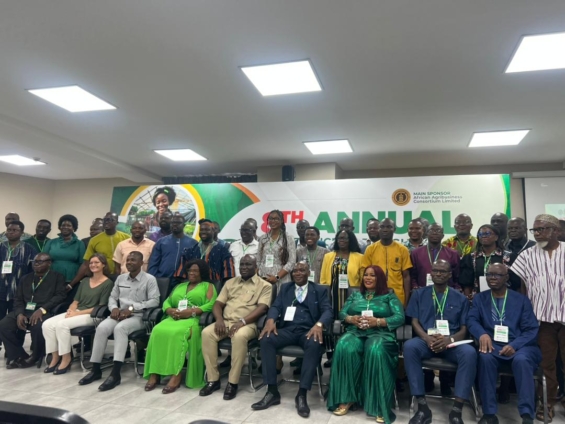
These recommendations were unveiled at the close of the Association’s 8th Annual Conference, held from November 6 to 7, 2025, at the Kwame Nkrumah University of Science and Technology (KNUST). The conference was themed “Transforming Agri-Food Systems in Developing Economies through Sustainable Agribusiness Development.”
The two-day gathering attracted agricultural economists, agribusiness professionals, agronomists, policymakers, young agripreneurs and key industry stakeholders, who deliberated on actionable strategies to advance the nation’s agricultural sector. More than 70 research presentations were delivered, addressing critical areas including agricultural policy, value chain improvement, food security and post-harvest management.
During the conference, members of the Association highlighted that sustainable agribusiness practices and increased agricultural investment are central to attaining food security and inclusive economic development.
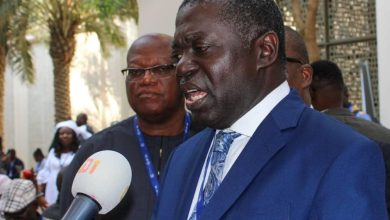
“In addition to providing an enabling policy environment, we call on government to increase budgetary allocation — at least 10% — for the agricultural sector. Adequate investment in agribusiness is critical to transforming Ghana’s agri-food systems,” the Association urged in a communiqué.
A key recommendation focused on promoting sustainable cocoa production to preserve Ghana’s access to premium global markets and ensure compliance with the European Union’s Deforestation Regulation (EUDR). The economists stressed the importance of generating empirical data on carbon sequestration within cocoa farming systems to guide both national policy formulation and on-farm practices.
Regarding agribusiness growth, industry stakeholders at the event advised young entrepreneurs to “dream big, start small, and start now,” encouraging start-ups to pursue innovative partnerships and make the most of existing resources to remain viable.
The experts also drew attention to the role of climate-smart agriculture in tackling rising food insecurity and water shortages. They proposed expanding the use of systems such as Alternate Wetting and Drying (AWD) among rice farmers to boost productivity and profitability.
GAAE further called for enhanced collaboration among research institutions, government bodies and the private sector to fast-track innovation within the agri-food space. Private agribusiness operators were also encouraged to work with the Association in conducting studies that provide “practical, evidence-based solutions” to existing challenges.
The conference ended with a renewed commitment from GAAE and its partners to strengthen public-private partnerships, promote evidence-based policymaking and build the capacity of emerging agribusiness leaders.
Participants agreed that advancing agri-food systems through sustainable agribusiness development remains essential for achieving inclusive economic growth, food security and environmental sustainability in Ghana and across the African continent.
Source: Joy News