KNUST, Yinson and Petroleum Commission launch Ghana’s first net-zero carbon emission lab

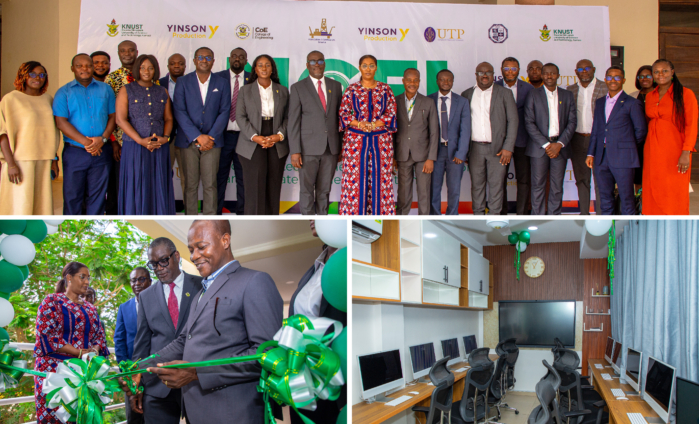
The Kwame Nkrumah University of Science and Technology (KNUST), in partnership with Yinson Production West Africa Limited (Yinson) and the Petroleum Commission (PC), has officially launched the Net-Zero Carbon Emission Lab (NCEL), the country’s first specialised centre dedicated to scientific carbon assessment, emissions modelling, advanced decarbonisation studies, and industry-oriented training.
Located within the College of Engineering, the new facility forms a core component of the five-year Net-Zero Carbon Emissions Project (NCEP). The project, which was formalised on June 12, 2025, seeks to unify Ghana’s greenhouse gas (GHG) emissions data into a single, interactive national platform while conducting a comprehensive carbon-intensity evaluation of the oil and gas industry.
Yinson financed the establishment of the lab with an investment of approximately US$350,000, releasing the first instalment after the submission of the inception report and implementation plan.
According to Prof. Kwabena Biritwum Nyarko, Provost of the College of Engineering, the initiative demonstrates the University’s commitment to producing graduates equipped for industry while offering scientific leadership to support national growth.
“Our work with industry is very relevant. We design our curriculum to respond to the needs of industry. They provide opportunities for internships and vacation training, ensuring our students are ready for the jobs of today and tomorrow,” he said.
“We also work with them in innovation and entrepreneurship, so students can create jobs when they finish.”
Speaking on behalf of the Vice-Chancellor, Prof. Samuel Asare-Nkansah noted that the NCEL fills a major gap in the country’s climate data landscape — the absence of a unified, scientifically sound baseline on Ghana’s emissions.
“Although Ghana is committed under the Paris Agreement to decarbonisation and net-zero emissions, we lack a unified emissions baseline. The NCEL is a clear demonstration of commitment to collaboration and knowledge-transfer partnerships between academia and industry,” he said.
He added that the project will help shape evidence-driven climate policies, enhance monitoring capabilities, and provide mitigation options for industries, especially those in the oil and gas space.
Naa Opoku-Agyeman, Managing Director of Yinson Ghana, emphasised that the company sees the project as part of its long-term approach to building national capacity.
“We believe in the power of education to turn around fortunes. When we invest in scholarships and infrastructure, we look not only at the impact today but at how these resources will support future students,” she said.
CEO of the Petroleum Commission, Victoria Emeafa Hardcastle, hailed the commissioning as “a transformative journey and a forward-looking commitment to sustainability, innovation and responsible resource development.”
Dr. Yen Adams Sokama-Neuyam, Senior Lecturer in the Department of Petroleum Engineering and Principal Investigator of the project, affirmed the team’s dedication to producing advanced research and offering high-level advisory support to inform public policy and drive industrial innovation in support of Ghana’s climate goals.
He noted that the initiative reflects the oil and gas sector’s strong commitment to national net-zero aspirations, backed by strategic investment in local research and development.
The NCEL features a modern workspace that also serves as a training studio, equipped with high-performance computing systems for AI-powered analytics and simulations, contemporary research stations, smart presentation tools, energy-efficient infrastructure, and enhanced security to protect equipment and sensitive project data.
Once fully operational, the facility will operate as a hybrid hub — combining research, industry training, and practical experimentation with emerging technologies such as Carbon Capture, Utilization and Storage (CCUS) targeted at decarbonising the oil and gas industry.
Within its first six months, the project has assembled a multidisciplinary team, appointed a project manager and communications officer, recruited six fully funded MPhil students, and broadened stakeholder engagement across national institutions.
Unlike conventional project-based labs that struggle to continue after initial funding phases, the NCEL is designed for long-term viability. Its sustainability plan includes generating revenue through professional training and certification programmes, strategic consultancy, carbon credit validation and verification, and specialised laboratory and technical services.
Source: Joy News