
Experts call for stronger soil protection to safeguard food security

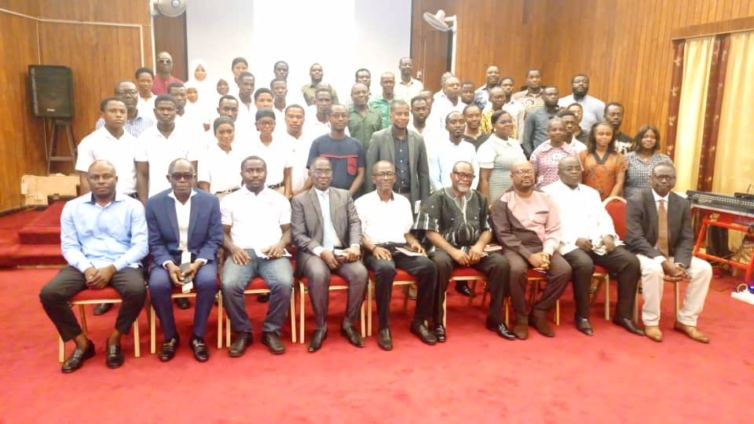
Environmental experts have called for enhanced measures to protect Ghana’s soils, cautioning that ongoing land degradation presents serious risks to food security, public health, and sustainable urban growth.
The concerns were raised at the 2025 World Soil Day commemoration held at the Soil Research Institute of the Council for Scientific and Industrial Research (CSIR-SRI), amid growing pressure on the nation’s land resources from illegal mining, environmental pollution, and the excessive application of chemical fertilisers.
Addressing participants at the event, a Lecturer at the University for Development Studies (UDS), Prof. Vincent K. Avornyo, emphasised the need to recognise soil as one of the country’s most vital natural resources, second only to water.
“Soil is the foundation of our existence, and it’s unfortunate that we’ve not given it the attention it deserves,” he said. “When the soil dies, human beings will also die or become sick.”
Prof. Avornyo explained that soil serves as the primary medium for crop production and plays a crucial role in determining the quality of food and water consumed by people. He warned that soil contamination inevitably leads to serious health consequences.
“Everything humans eat comes from the soil. If it is polluted, it affects the food chain and ultimately human health. The soil is a living entity, and it is our responsibility to protect it,” he added.
The President of the Soil Science Society of Ghana, Dr. Edward Yeboah, echoed these concerns, urging policymakers and urban planners to adopt a long-term perspective rather than focusing solely on immediate agricultural output.
“Soil health is about maintaining a balanced community of organisms and good physical and chemical structure to ensure long-term productivity and environmental quality,” he said.
The 2025 World Soil Day celebration was held under the theme, “Healthy Soil for Healthy Cities,” drawing attention to the growing relevance of soil conservation in rapidly urbanising areas.


