
Fish Farmers Trained on Antimicrobial Use Data Collection to Fight Resistance

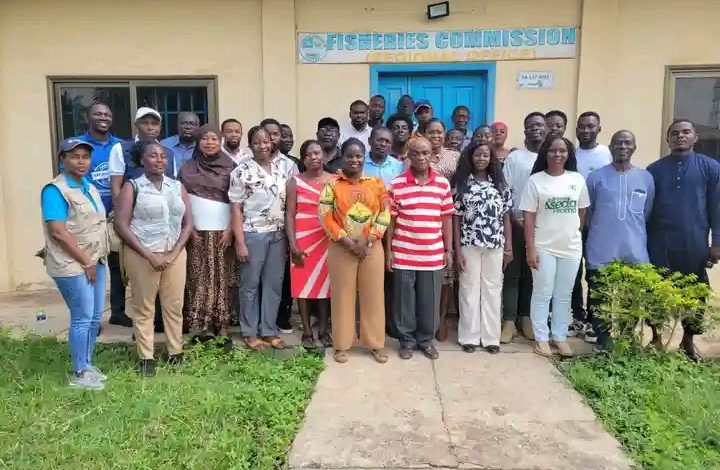
Fish farmers in the Ashanti and Eastern Regions have received training on antimicrobial use (AMU) on-farm data collection as part of national efforts to promote responsible aquaculture practices and combat antimicrobial resistance (AMR).
The training organised by the Veterinary Services Directorate in collaboration with the Fisheries Commission and the Food and Agriculture Organization of the United Nations (FAO), and targeted Farmer Field School (FFS) groups in the two regions.
The programme aimed to equip farmers with practical knowledge on the appropriate use of antimicrobials in fish farming and the importance of accurate data collection at farm level. Participants were taken through modules on responsible antibiotic use, the dangers of misuse, drug residues in fish, and the link between poor antimicrobial practices and the emergence of resistant diseases.
The sessions also provided a platform for farmers to share experiences and lessons learnt since the inception of the Farmer Field School initiative, helping to identify common challenges in disease management, biosecurity and record-keeping.
Officials explained that reliable AMU data is essential for effective surveillance, policy development and disease control, and urged farmers to view record-keeping as a critical contribution to safeguarding public health rather than a regulatory burden.
The training aligns with Ghana’s One Health strategy, which recognises the close link between human, animal and environmental health, and supports national policies led by the Ministry of Food and Agriculture and the Ministry of Health.
The initiative also reflects international standards and commitments promoted by the World Organisation for Animal Health, aimed at improving food safety and ensuring the long-term sustainability of the country’s growing aquaculture sector.


